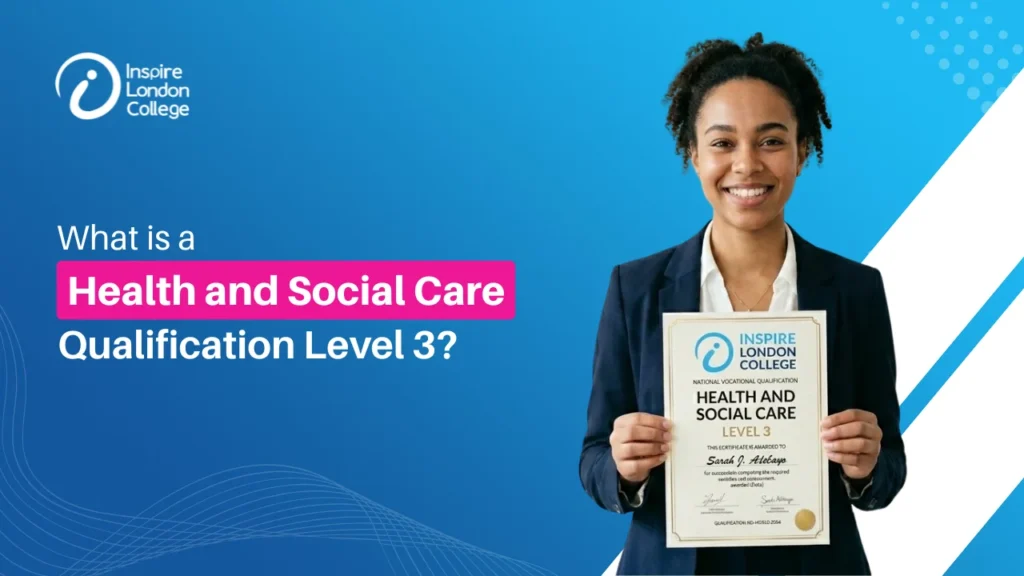

A Health and Social Care Qualification Level 3 is a recognised UK qualification that helps you take your first step or move forward in a care career. It prepares you to support people of all ages in real care settings and handle everyday responsibilities with ease. Whether you plan to start working in care or continue your studies in healthcare or social work, this qualification gives you a clear and meaningful career path. If you’re considering this course, you might wonder, is health and social care level 3 hard? In reality, most learners find it manageable because it focuses on practical skills and real-life care situations rather than complex theory.
Take the next step by understanding what is a Health and Social Care Qualification Level 3 and start building a rewarding career in care today.
What is Level 3 Health and Social Care, and Why Does it Matter?
A Level 3 Health and Social Care qualification serves as a nationally recognised UK course for people who want to work in health and care settings. What is level 3 health and social equivalent to? People consider this qualification equivalent to A-levels, and it focuses on real-life care situations rather than just theory. This qualification matters because it builds essential care skills, improves your job opportunities, and opens pathways into nursing, social work, and advanced healthcare training.
It suits learners who want real, practical experience in care along with a recognised qualification that employers trust. It improves your employability because it gives you industry-relevant knowledge and prepares you for real care roles. It also helps you develop practical care skills that you use every day in the workplace. Most importantly, it opens doors to further study, including nursing and higher-level health and social care qualifications.
Key Things You Should Know Before Getting Started
Before starting this course, it helps to understand what the qualification offers and how it works. What do you do in level 3 health and social care? The Level 3 Health and Social Care course provides a flexible and accessible way to build essential care knowledge. It focuses on practical learning that prepares learners for real care situations in the workplace.
- Entry Requirements & Course Format
You do not need formal qualifications to enrol, so beginners and career changers can start easily. In addition, the course runs fully online, so you can study from anywhere at your own pace. As a result, you only need basic computer skills to access materials, complete tasks, and receive support throughout the course.
- What You Will Learn
This course builds strong foundational knowledge and practical care skills. It covers communication techniques needed to interact effectively in care settings. The course also includes safeguarding and protection to help you keep vulnerable individuals safe. Additional topics include mental health support, person-centred care, and understanding legal and professional responsibilities in UK care environments.
- Suitable for?
The course targets anyone who wants to start or grow a career in health and social care. It supports beginners who want to enter the sector with confidence and direction. Existing care workers can use it to strengthen their skills, while aspiring nurses and support workers gain a solid foundation for future healthcare roles. Career changers also find it useful for moving into a stable and meaningful profession.
- Course Duration
Course length varies depending on individual learning speed and available study time. Some learners complete it within a few months, while others may take up to a year. The self-paced structure allows full control over progress, making it easier to balance study with work, family, or other personal commitments.
Choose the Right Level 3 Qualification
If you want a trusted and flexible way to begin your care career, Inspire London College offers a range of recognised Level 3 qualifications designed to match your goals. The college works with leading awarding bodies such as Qualifi, OTHM, NOCN, and iCQ Awards, so you gain a qualification that employers value. Each course focuses on practical skills, real-world knowledge, and career progression, so you can step into the care sector with confidence. You can choose from:
- Qualifi – Level 3 Diploma in Health and Social Care for a strong academic and practical foundation
- OTHM – Level 3 Foundation Diploma in Health and Social Care to prepare for further study or entry-level roles
- NOCN Level 3 Diploma in Adult Care (England) for hands-on skills in adult care settings
- iCQ Level 3 Diploma in Adult Care (England) to build competence in real workplace environments
- NOCN Level 3 Diploma in Adult Care to strengthen your practical experience and progress confidently into senior care roles
Career Opportunities After Level 3
What jobs can you get with a level 3? What jobs can you get with a Level 3 qualification? A Level 3 Health and Social Care qualification opens the door to many rewarding roles in the care sector. It helps you start in frontline positions and, over time, move into more specialised or senior roles with experience. As a result, you can explore a variety of career options in health and social care.
- Support Worker: Provides essential daily support such as personal care, mobility assistance, and emotional well-being support in residential or home care settings. (£21K/yr Average base pay)
- Healthcare Assistant: Works alongside nurses and healthcare professionals, assisting with clinical duties and supporting patient care in hospitals, clinics, or care homes. (£22K/yr, Average base pay)
- Senior Care Worker: Takes responsibility for supervising junior staff, coordinating care tasks, and supporting the delivery of personalised care plans. (£22K/yr Average base pay)
- Mental Health Support Worker: Offers emotional, social, and practical support to individuals experiencing mental health challenges in structured care environments. (£19K/yr, Average base pay)
Final Thoughts
Knowing ‘what is a Health and Social Care Qualification Level 3’ helps you make informed decisions about your future in the care sector. It’s more than just a qualification. It gives you a clear direction, practical skills, and the confidence to build a meaningful and stable career. Additionally, with the right training, you can move into rewarding roles or continue your studies in healthcare. If you’re ready to take the next step, Inspire London College offers flexible, online, and industry-recognised qualifications designed to support your career growth in health and social care.