
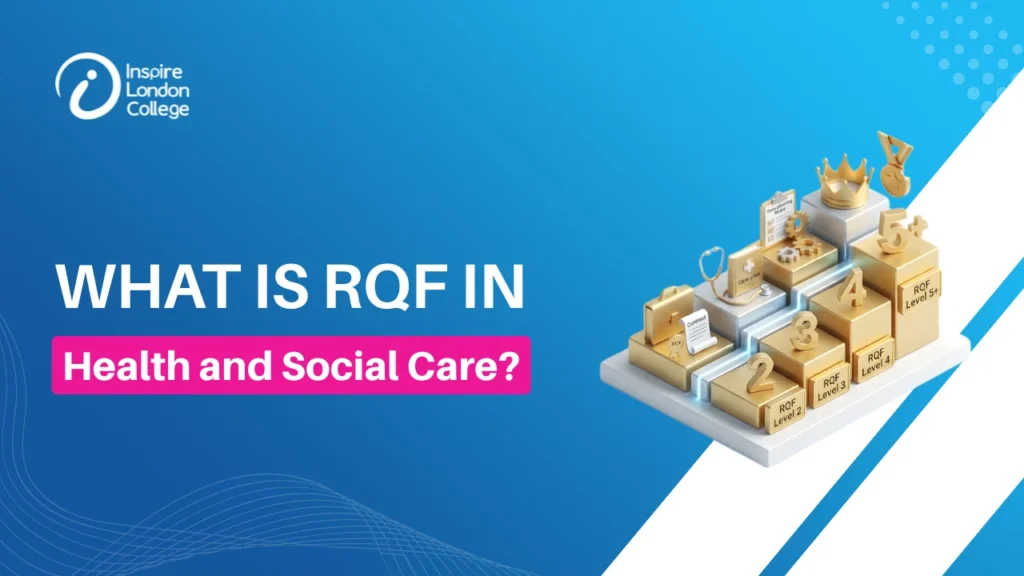

The Regulated Qualifications Framework (RQF) appears on many health and social care qualifications, yet it sometimes confuses learners at first glance. You may see it listed on course details without fully understanding what it means. Therefore, many learners ask, ‘What is RQF in health and social care, and why does it matter for their career path?’ RQF is a system that classifies qualifications into levels based on difficulty and learning outcomes. As a result, it becomes easier to understand the value of each course.
Let’s break it down step by step so you can understand it with confidence.
What is RQF?
Have you ever wondered what RQF actually means when you see it on a health and social care course? You may also ask, what does RQF qualification mean? Simply, RQF stands for the Regulated Qualifications Framework. It is a UK system that groups qualifications into levels based on their difficulty and the knowledge you gain from them. Therefore, it helps you clearly understand the value of a qualification before you start studying. In health and social care, it plays an important role in making courses easy to compare and understand.
Why RQF Matters in Health and Social Care
Understanding qualifications in health and social care becomes much easier when you know how the system behind them works. The Regulated Qualifications Framework (RQF) matters because it provides a clear structure for designing and recognising courses across the UK. It helps you see the difficulty level of a qualification before you start. Moreover, employers use RQF levels to consistently and reliably understand your skills. As a result, it creates a clear and trusted pathway for learning and career progression in health and social care.
Structure of RQF Levels
The Regulated Qualifications Framework (RQF) organises qualifications into different levels to show their difficulty and progression. You may also wonder, how many RQF levels are there in the UK? It includes an entry level followed by Level 1 through Level 8, covering everything from basic learning to advanced professional study. In health and social care, lower levels like Level 1–2 usually support support worker roles, while Level 3 prepares you for care worker positions.
Moreover, Level 4–5 focuses on supervisory and management roles, and higher levels move towards advanced professional development. These qualifications use credits and units to measure learning progress and achievement in a structured way. Therefore, RQF provides a clear and organised system that helps you understand your growth in the care sector.
RQF Qualifications in Health and Social Care
Not sure where to start your journey in health and social care? Inspire London College is here to guide you with high-quality, regulated qualifications designed to support every stage of your career. From beginner-friendly Level 2 courses that build essential care knowledge to advanced Level 4 and Level 5 qualifications for leadership and management roles, there is a clear pathway for progression. These qualifications provide structured learning and are widely recognised across the UK, helping you build skills and boost your CV and long-term career opportunities in the care sector.
Benefits of RQF for Learners and Professionals
RQF plays an important role in shaping learning and career growth in health and social care. You may ask, ‘What are the benefits of RQF?’ It helps learners and professionals understand qualifications in a structured way. Therefore, it supports long-term development in the sector.
Let’s explore the key benefits in detail.
- Career advancement opportunities become more accessible through RQF. It helps you move step by step from entry-level roles to more senior positions. As a result, it supports steady career growth in the health and social care sector.
- Recognition across UK employers improves with RQF qualifications. Most employers understand and trust the RQF system because it follows a national standard. Therefore, your qualification carries clear value across different workplaces.
- Improved skills and confidence develop as you progress through RQF levels. Each stage builds new knowledge and practical ability in care settings. This helps you perform better in real job roles.
- Pathways to higher education and professional careers become clearer with RQF. Moreover, it provides a structured route towards nursing, social work, and other advanced roles. As a result, it supports long-term academic and career ambitions.
How to Choose the Right RQF Level in Health and Social Care
What is RQF in health and social care? It helps learners understand the level of study and the skills required for different qualifications. Choosing the right RQF level depends on your experience and career goals. Beginners usually start with lower levels to build basic skills, while experienced learners can progress to higher levels for greater responsibility. Inspire London College offers a range of qualifications to support you at every stage of your journey. So, what are you waiting for? Explore now and take the next step in your health and social care career.